
The One System That Can Snap Back - (Part 5)
The Exception the Universe Revealed

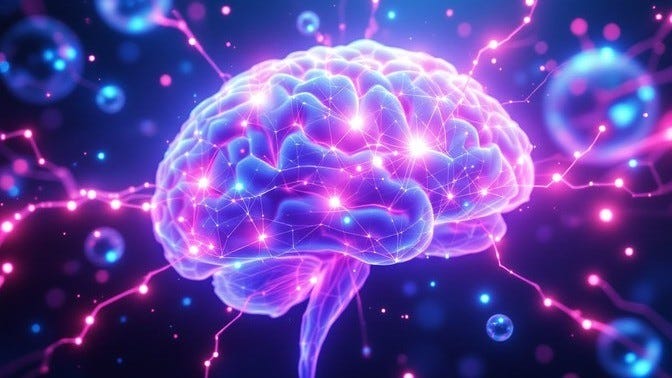
PART 5 — The One System That Can Snap Back
(The Exception the Universe Revealed)
Originally written for LinkedIn November 25, 2025
Series: The Age of Disclosure We Weren’t Ready For
Series Index — The Age of Disclosure We Weren’t Ready For
• Part 1 — The Drift Problem (In Plain English) →
• Part 2 — Why AI Remembers Incorrectly (and Then Fixes Itself) →
• Part 3 — How to Build an AI That Doesn’t Permanently Drift →
• Part 4 — The Spacetime Bubble Model →
• Part 5 — The One System That Can Snap Back → (You’re Here)
We’ve said it four different ways now.
Closed systems drift.
Gyroscopes drift.
Navigation systems drift.
Clocks drift.
LLMs drift.
Datasets drift.
Companies drift.
Civilizations drift.
Even spacetime drifts.
That’s not a bug.
That’s the rule.
If a system only references itself, it slowly loses its shape.
No reference → drift.
That law doesn’t blink.
Except for one strange, beautiful exception.
There is one kind of system that can drift… and still come back.
The Difference Isn’t Intelligence. It’s Contact.
Every system we’ve talked about so far lives inside its own little box.
It spins.
It integrates.
It predicts.
It optimizes.
But it never steps outside itself.
There is one system that does.
It guesses —
then it looks.
It predicts —
then it touches.
It imagines —
then it checks.
Internal story → external contact → correction → coherence.
Over and over.
All day.
Every day.
It Doesn’t Trust Itself Completely
This is the part nobody likes to admit.
The system that doesn’t permanently drift is the one that assumes it might be wrong.
It treats its own internal state as a draft.
Not a verdict.
It believes.
Then it verifies.
It thinks.
Then it tests.
It remembers.
Then it updates.
That loop is what keeps it from flying off into the weeds.
Other systems drift until they fail.
This one drifts until it learns.
And You Already Know What It Is
It’s the human brain.
Not because it’s magical.
Not because it’s perfect.
God knows it isn’t perfect.
Humans misremember.
Humans hallucinate.
Humans get things wrong.
But here’s the difference:
We reopen our eyes.
We hear someone say, “No, that’s not what happened.”
We touch the ground.
We check the map.
We test the memory.
We reconcile the story.
Reality pushes back.
And we adjust.
That pushback is the anchor.
The world is the validator.
Experience is the calibration.
Other people are the correction layer.
The brain is not a closed loop.
It’s an open one.
That’s why it can survive drift.
Why This Matters for AI
Right now most AI systems are sealed containers.
They scale.
They optimize.
They predict.
They reinforce.
But they don’t truly step outside themselves.
They don’t have a second frame.
And until they do, drift isn’t a possibility.
It’s a guarantee.
More parameters won’t fix it.
More GPUs won’t fix it.
More internal “alignment layers” won’t fix it.
You cannot stabilize a system from the inside if the inside is all it has.
If machines are ever going to behave like minds,
they’ll need what the mind has:
An anchor that lives outside their own reasoning.
Not self-permission.
External correction.
Not internal optimism.
Admissibility before action.
Architecture is destiny.
Final Word
Everything drifts when it talks only to itself.
The brain doesn’t escape drift because it’s smart.
It escapes permanent drift because it keeps checking the world.
It steps outside the box.
And snaps back.
That’s the exception.
And that’s where AI goes next.
Start at the beginning.
Follow the pattern.
Watch it unfold.
• Part 1 — The Drift Problem (In Plain English) →
• Part 2 — Why AI Remembers Incorrectly (and Then Fixes Itself) →
• Part 3 — How to Build an AI That Doesn’t Permanently Drift →
• Part 4 — The Spacetime Bubble Model →
• Part 5 — The One System That Can Snap Back →
—
Everything drifts.
Except what learns to anchor.
But be careful where and what you learn.
How America’s Drift Began?
What They Replaced — Layer by Layer?
Chris Ciappa
Independent Systems & Coherence Architect
Samirac Partners LLC