
Proof, Trust, and the Quantum Mirage
Why “Proof of Entanglement” Doesn’t Replace Consensus
![7 Mirage Spiritual Meanings [Answered!]](https://substackcdn.com/image/fetch/$s_!4fzM!,f_auto,q_auto:good,fl_progressive:steep/https%3A%2F%2Fsubstack-post-media.s3.amazonaws.com%2Fpublic%2Fimages%2F64ed66b9-e8b3-4fef-ab19-c59803cba659_1006x575.jpeg "7 Mirage Spiritual Meanings [Answered!]")
By Chris Ciappa
Founder & Chief Coherence Architect
Samirac Partners
The Push for Something Better
Proof of Work is how many blockchain systems establish trust today.
Thousands of machines compete to solve computational problems.
Whoever wins earns the right to validate the next transaction.
That competition is the point.
It creates cost.
It creates difficulty.
It makes it expensive to cheat.
But it also burns enormous amounts of energy just to confirm something that already happened.
So naturally, people are looking for alternatives.
And that’s where ideas like “proof of entanglement” start getting attention.
The promise sounds compelling:
No competition.
No wasted computation.
Instant trust.
But before accepting that premise, we need to ask a more precise question:
What problem is actually being solved?
What Proof of Work Actually Does
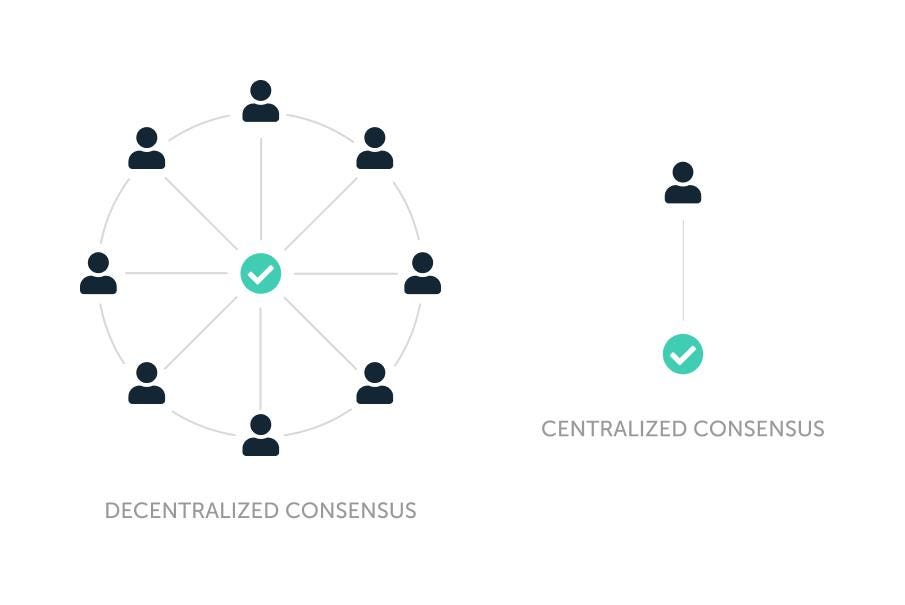
Proof of Work is often misunderstood as “verification.”
It’s not.
It’s a mechanism for agreement across parties that do not trust each other.
That’s the real problem:
No central authority
Multiple independent actors
A shared history that must be agreed upon
Proof of Work doesn’t prove that something is true.
It proves that:
Enough work was done to make rewriting history prohibitively expensive.
That’s how trust emerges—not from correctness, but from cost and consensus.
The “Two Safes” Analogy — And Why It Fails

A common explanation of “proof of entanglement” goes something like this:
Two systems are linked.
They generate the same result at the same time.
They don’t need outside verification because they already share the proof.
It sounds intuitive.
It’s also completely misleading.
What’s being described here is not quantum entanglement.
It’s a classical system with shared state.
In practice, that looks like:
Pre-shared keys
Synchronized systems
Deterministic outputs
In other words:
Two servers that already agree.
And if two parties already agree, you’ve skipped the hardest part of the problem.
Because blockchain doesn’t exist to help two trusted systems communicate.
It exists to allow many untrusted systems to agree.
What Quantum Entanglement Actually Is

Quantum entanglement is a real physical phenomenon.
But it does not behave the way these analogies suggest.
Entangled particles share a joint state.
When measured, their outcomes are correlated.
But:
The outcomes are not predetermined
You cannot control the result
You cannot use it to transmit information
This is critical:
Entanglement produces correlation—not communication.
And certainly not agreement across independent systems.
What “Proof of Entanglement” Could Mean
To be fair, the term isn’t entirely meaningless.
In legitimate contexts, it can refer to:
Verifying that a system is genuinely quantum (e.g., Bell inequality tests)
Detecting interference or tampering
Supporting secure key exchange (quantum key distribution)
In these cases, entanglement is useful because:
If the correlation breaks, something interfered.
That’s valuable.
But notice what it does not do:
It does not validate transactions
It does not establish shared history
It does not create consensus across a network
It is a signal integrity mechanism, not a trust mechanism between competing parties.
The Category Mistake
Layered diagram — Blockchain vs Cryptography vs Quantum Physics]
The confusion comes from blending three separate layers:
Blockchain — Agreement across distrustful participants
Cryptography — Secure communication and verification
Quantum Entanglement — Physical correlation of states
Each of these solves a different problem.
What’s happening in many of these explanations is a category mistake:
Treating a physical correlation mechanism as if it replaces a system-level agreement problem.
It doesn’t.
Replacing Proof of Work requires solving consensus.
Entanglement doesn’t do that.
This is the same structural mistake that shows up more broadly when security mechanisms are confused with execution control.
If you want a deeper breakdown of that distinction—particularly how admissibility and execution authority differ from cryptographic or quantum guarantees—you can read more here:
https://coherencearchitect.substack.com/p/drift-stack-and-saq-vs-quantum-threats
Where Quantum Does Matter
None of this means quantum systems are irrelevant.
They matter—a lot.
They can improve:
Identity systems
Key exchange
Security guarantees
They may even reshape parts of distributed systems.
But they do not eliminate the need for agreement across independent actors.
And that’s the core problem blockchain was designed to solve.
The Real Question
The question isn’t whether quantum technology is powerful.
It is.
The question is:
Does it solve the same problem?
Right now, “proof of entanglement” is being framed as a replacement for consensus.
It isn’t.
And until it is, the hard part of trust remains exactly where it has always been:
Not in correlation.
Not in shared state.
But in agreement across systems that do not inherently trust each other.
Control is not part of the stack.
It governs the stack.
The Only Question That Matters
The architecture is already defined.
Drift Stack™ Architecture
https://www.samirac.com/drift-architecture
Now ask yourself:
👉 Does my system control what’s allowed at execution —
or does it just react and hope it gets it right?
Architecture Demos
https://www.samirac.com/daisy-demos
Share This Article
If you found this article valuable, share it.
Substack automatically gives every subscriber a personal referral link. When someone subscribes through your share link, it counts toward referral rewards.
Current rewards:
• 3 referrals → 1 month of paid access
• 5 referrals → 6 months of paid access
• 10 referrals → 12 months of paid access
You can share directly using the Share button on this article, or find your personal referral link here:
By Chris Ciappa
Founder & Chief Coherence Architect
Samirac Partners